


How Cardinal Marengo is building the Church in Mongolia through encounter and respect

In the vast steppes the world’s most sparsely populated country a gradual, understated movement of faith has been emerging. Cardinal Giorgio Marengo, the second youngest member of the College of Cardinals, has spent over two decades serving the small Catholic community.
A mission built on presence
Born in Italy in 1974, Cardinal Marengo joined the Consolata Missionaries (IMC) in 1995 and arrived in Mongolia in 2003.
This was just over a decade after the country’s democratic revolution ended 66 years of Communist rule; a rule that had suppressed all religious practice.

In July 1992, shortly after the Holy See established diplomatic relations with Mongolia, Fr Wenceslao (Wens) Padilla CICM arrived in the capital city of Ulaanbaatar with two other Filipino priests.
When they arrived, there was no Church and the Catholic community consisted of a few foreigners who worked in the embassies. Fr Wenceslao Padilla later become the first Bishop of Mongolia.
When Cardinal Marengo began his ministry in 2003, there were only around 200 Mongolian Catholics in total. Today, thanks to his patient, culturally sensitive approach, the community numbers around 1,450 faithful in a nation of 3.5 million.
A quiet but powerful message of fellowship
‘Whispering the Gospel’ is how Cardinal Marengo describes his method of evangelisation. His approach ‘presupposes an intimate relationship and means reaching the heart of people.’ It’s a mission of depth rather than breadth, one that respects the Buddhist majority and honours Mongolian culture and traditions. The Cardinal believes:
‘Only when the heart of the culture can be touched by the Gospel will it really bear fruit.’
And Cardinal Marengo has consistently practised what he preaches. Former Mongolian President Nambaryn Enkhbayar noted:
‘He speaks fluent Mongolian, a difficult language, which he mastered while living in Mongolia for more than 15 years, mainly in the rural area of the country.’
Faith in action
For Cardinal Marengo, evangelisation isn’t just about words. It’s about embodying Gospel values through service. Under his leadership, he explains:
‘71% of our activities are aimed at serving the society in which we live, in education, health, social development projects and also in researching into having a deeper understanding of the local culture.’
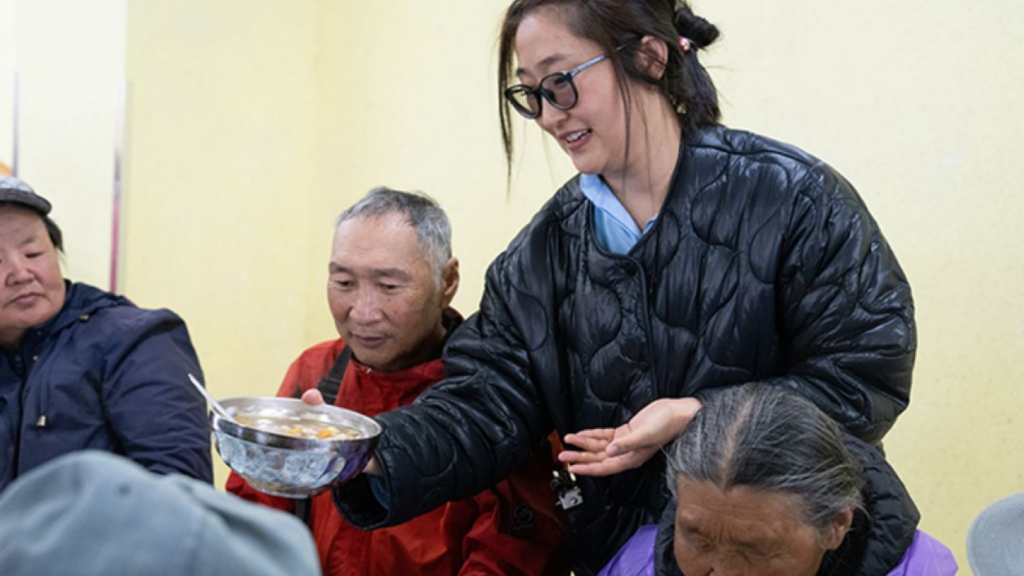
The projects speak to the Church’s commitment to people who are marginalised:
- The House of Mercy, providing refuge for those on society’s edges
- Schools and youth centres serving children from preschool through grade 12, including a technical school offering practical skills training
- A walk-in clinic serving around 11,000 people annually who lack health insurance or are unable to access health care, shelter or food
- Two homes for elderly residents who’ve faced poverty or abandonment
- A centre for 30 disabled children and young adults, helping them develop skills for greater social integration
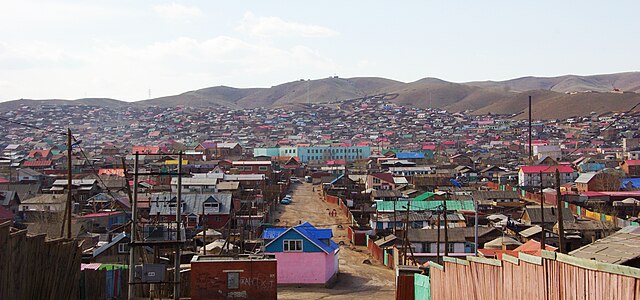
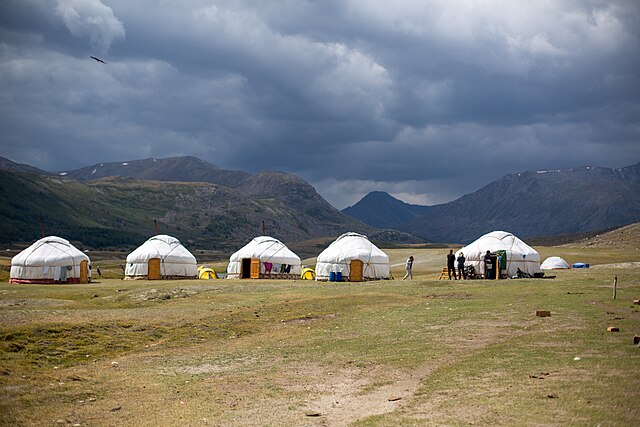
With winter temperatures in the capital, Ulaanbaatar, regularly dropping below -30°C, and up to 800,000 people living in underserved ger (traditional tent) districts which lack heating, water and sanitation, the Church’s presence offers both practical support and hope.
An ancient method for a modern world
Cardinal Marengo’s approach is truly missionary. In our digitally connected world, he argues that true evangelisation still requires human presence: people willing to leave home and immerse themselves in unfamiliar cultures. He shares:
‘I believe that, precisely in our time, it is worth recognising the specificity of the first proclamation of the Gospel. The Gospel that is proclaimed to those who do not know what it is.’
Whilst technology and mass media have their place, the Cardinal emphasises that sharing the love of Christ requires something more:
‘…contact with a human reality remains necessary. A human reality that facilitates and makes the encounter with Christ possible. Because this experience is always mediated by attraction and contact.’
The vital difference missionaries make
The Cardinal spent 14 years in a remote area of Mongolia, learning the language, understanding the culture and building trust. This slow, patient approach created the foundation for authentic relationships. He reflects on the time missionaries invest:
‘Just think of the time spent learning difficult languages in order to immerse themselves deeply and respectfully in the cultures of the people with whom one lives. Everything presupposes understanding, friendly closeness, in order to build a relationship of trust.’
He points out the stark difference between established Church contexts and mission territories like Mongolia:
‘It is one thing to live in places where the Church is established with all the charisms and ministries, and quite another to have a Church with only one local priest, as is the case with us in Mongolia.’
Patience and respect
Cardinal Marengo’s mission isn’t about pushing or persuading. It’s about creating space for the Holy Spirit to work. With strong echoes of the early Christian Church, the Church in Mongolia operates from a position of ‘absolute minority’ in a society where Buddhist and non-religious worldviews dominate. Yet rather than seeing this as a limitation, the Cardinal views it as an opportunity to witness to the transformative power of faith lived authentically:
‘If Christ’s message were a mere message, a teaching of life, there would be no need to call men and women to go to the ends of the earth, as Jesus himself does in the Gospel. Jesus became part of a particular people and a particular culture. Thirty years of hidden life, three years of explicit activity and three days of passion that lead to the resurrection. All those who follow him are called to let themselves be shaped by the Holy Spirit to live the same mystery. This is the mission.’
Cardinal Marengo’s witness reminds us that mission isn’t just about numbers or rapid growth. It’s about the patient work of accompaniment; the courage to immerse ourselves in unfamiliar contexts and the trust that when we create space for authentic encounter, the Holy Spirit does the rest.