

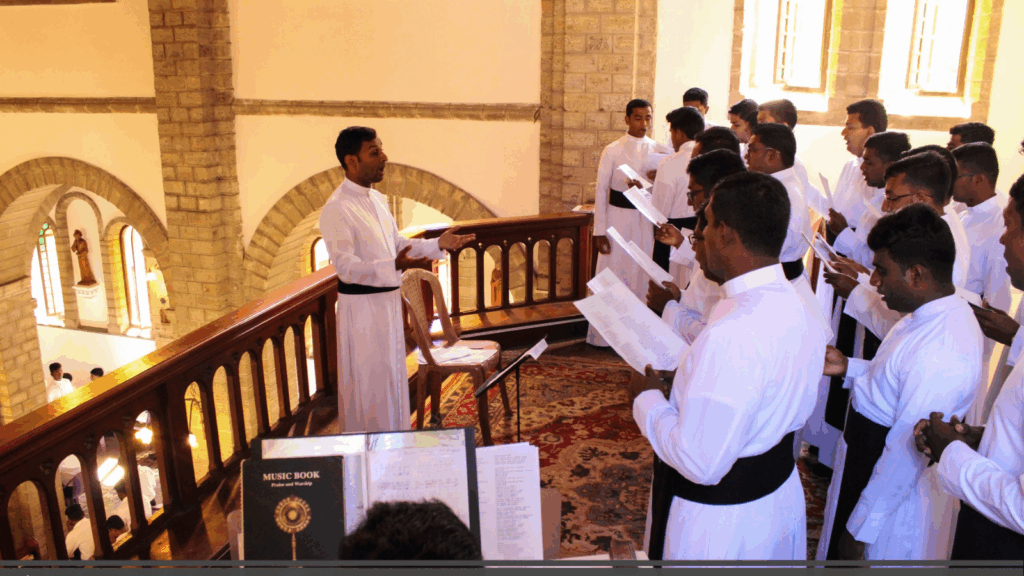
Missio has a special, long-standing partnership with the National Seminary of Our Lady of Lanka in Kandy, whereby supporters can sponsor the training of a seminarian or future priest. You may have read the condensed version of the Rector’s message in Mission Today. Here is Fr Quintus’ full message:
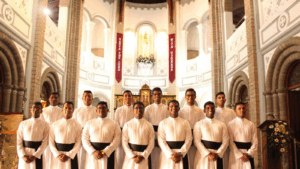 We have a total number of 234 seminarians studying for the Academic Year of 2025/2026. They comprise of 139 Diocesan Brothers from all 12 Diocese in Sri Lanka and 95 Religious Brothers from 15 Religious Congregations.
This rich diversity makes the Seminary a truly national institution, uniting the diocesan and religious forms of priestly vocations in one common house of formation.
We continue our sacred mission of forming missionary priests whose lives are conformed to Jesus Christ, the Good Shepherd, rooted in scripture, tradition and the teachings of the Church.
The joys of 2025
 During 2025, we were blessed to witness 31 priestly ordinations of 13 Diocesan priests and 18 Religious priests.
In addition, the seminarians progressed through the traditional stages of formation:
- Candidacy for Diaconate & Priesthood: 13 Diocesan Seminarians were admitted on 23 February 2025 by the Auxiliary Bishop of Colombo, Most Rev Dr P Anton Ranjith.
- Ministry of Lector: Conferred on 23 Second-Year Diocesan Seminarians by the Bishop of Galle, Most Rev Dr Raymond Kingsley Wickramasinghe.
- Ministry of Acolyte: Conferred on 23 Third-Year Diocesan Seminarians on 8 June 2025 (Pentecost).
The context we work in
Sri Lanka is a multi-ethnic country. According to the latest census, the Sinhalese are the majority group at 74.1%, followed by Sri Lankan Tamils (12.3%), Muslims (10.5%) and Indian Tamils (2.8%). Other ethnic groups make up the remaining 0.3% of the population.
 Sri Lanka is also a multi-religious country. According to the 2024 Census, the religious composition is: Buddhism (69.8%), Hinduism (12.6%), Islam (10.7%), Roman Catholics (5.6%) and other Christians (1.3%).
The most notable factor is the decrease of the Catholic population in Sri Lanka. The 2024 national census indicates that Catholics comprise 5.6% of the Sri Lankan population, marking a slight, yet notable, decline from previous estimates (6.1% in 2012).
This reduction reflects broader demographic trends affecting the entire nation – declining birth rates, significant outward migration of young people and increasing secular influences. These factors have had a pronounced impact on minority communities, including Catholics.
Reasons to hope
Despite being a small community within a predominantly Buddhist country, the Catholic Church continues to enjoy a high degree of respect due to its long-standing contributions to education, social welfare, and interreligious harmony. However, a shrinking demographic base presents emerging challenges to the Church’s pastoral mission and institutional sustainability.
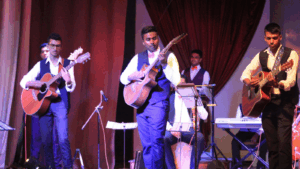 One of the most direct consequences of this demographic shift is the decline in vocations to the priesthood and religious life. With fewer young Catholics in the population, the pool of potential seminarians naturally decreases. The effects are already visible: vocational numbers remain stable only through extraordinary pastoral effort, and several dioceses and religious congregations anticipate shortages of clergy in the coming decades.
This will inevitably shape the future pastoral landscape of the Church in Sri Lanka, requiring a more strategic deployment of priests, increased collaboration with the laity and the strengthening of pastoral structures capable of sustaining vibrant parish life with fewer ordained ministers.
Moreover, the Church must prepare for a future in which mobility, migration and changing family structures redefine parish communities. These realities call for renewed evangelisation, youth engagement, family ministry and creative vocational promotion. At the same time, they challenge the Seminary to form priests who are missionary, synodal, adaptable and capable of serving a rapidly changing and increasingly secularised society.
Special Celebrations
- Workshop on Synodality
In July 2025, we hosted His Eminence Mario Cardinal Grech, Secretary General of the Synod of Bishops, for a two-day programme dedicated to deepening the Church’s understanding of synodality. The visit included a Study Day, a formal encounter and a workshop which focused on the theme ‘Towards a Priestly
Culture of Synodality’, highlighting the indispensable role of priests in shaping a Church rooted in communion, participation and mission. Through inputs, discussions and group work, the Seminary community reflected on the synodal vision proposed by Pope Francis and the global Synod.
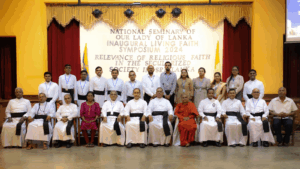 In his keynote address, Cardinal Grech stressed that synodality is not a passing initiative, but the very path God expects of the Church in the third millennium. He underlined that the Church becomes truly synodal when she listens attentively – to the Holy Spirit, to one another and to the cries of the world.
The Cardinal warned against the dangers of clericalism and emphasised the theological relationship between the baptismal and ministerial priesthoods. He called for a profound renewal of priestly formation, urging seminaries to cultivate openness, dialogue, pastoral immersion and collaborative leadership.
Cardinal Grech insisted that future priests must be formed as servant leaders capable of walking with the people of God, fostering discernment and animating co-responsibility in parish life. His visit affirmed the Seminary’s commitment to revising its formation programme in harmony with the Synod’s recommendations. The encounter was experienced as a moment of grace, strengthening the Seminary’s resolve to prepare pastors who will guide the Sri Lankan Church forward on its synodal journey.
- Solemn Inauguration of the Academic Year 2025/2026
The Solemn Inauguration of the Academic Year was held on 1 October 2025 with the gracious presence of Most Rev Dr Harold Anthony Perera, President of the CBCSL. The guest of honour was Msgr Guy Bognon, Secretary General of POSPA. As usual the Provincial Superiors, Superiors of the Houses of Formation, members of the academic staff and the entire student body attended the event.
- Visit of the General Secretary of Missio’s Society of St Peter the Apostle
Very Rev Msgr Guy Bognon, PSS, the General Secretary of Missio’s Society of St Peter the Apostle, along with Rev Fr Alessandra Brandi, visited the National Seminary from 30 September to 3 October 2025. During their stay, they attended the Solemn Inauguration of the Academic Year and met with the student body, academic staff and the team of formators.
- Annual Living Faith Symposium
In 2025, the Living Faith Symposium was held on the theme of the ‘Integral Dignity of Human Person in the face of current adversities’. The keynote addresses focused on ‘AI and Human Dignity’ and ‘Human Dignity and the Displaced Other in Adversity’, and were delivered by Professor Thushari Silva (Department of Computational Mathematics, Faculty of Information
Technology, University of Moratuwa) and Rev Dr M W Sumeth Perera SJ (Department of Biochemistry, Faculty of Medicine, Sabaragamuwa University). There were 25 other papers presented covering various aspects of the main theme. The symposium was held on 25 October.
- 25th Anniversary of the Living Faith, the National Seminary Journal
The year of 2025 marked the 25th Anniversary of the Publication of the Sri Lanka National Seminary Journal, Living Faith. It was commemorated with the publication of a special edition, containing the research articles of the Living Faith Symposium 2024.
Facing the challenges
One of the major challenges encountered during 2025 was the intellectual formation programme, which has undergone significant restructuring in light of the requirements of Veritatis Gaudium.
In accordance with this Apostolic Constitution, a new higher institute had to be erected to canonically and academically administer the programme. This development, while essential, brings with it a number of institutional obligations, including the need for a specified number of full-time lecturers, each holding the required ecclesiastical or civil qualifications, who are capable of meeting the academic standards demanded of a higher institute.
Meeting these requirements has proven difficult. The preparation of future lecturers is hampered by the limited availability of scholarships in ecclesiastical universities abroad. These opportunities were more accessible in previous decades.
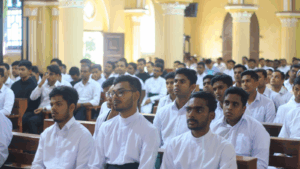 Consequently, forming suitably qualified academic staff has become a long-term challenge. Furthermore, identifying dedicated lecturers who can commit themselves fully to teaching remains problematic, as many priests and religious who possess the necessary competence are already burdened with multiple responsibilities within their dioceses or religious congregations. This lack of personnel restricts the Seminary’s ability to build a stable and adequately staffed academic faculty.
These intersecting challenges place considerable pressure on the Seminary as it strives to implement the vision of Veritatis Gaudium, maintain academic excellence and ensure the robust intellectual preparation of future priests for the mission of the Church in Sri Lanka.
The needs of the Seminary
A further and pressing challenge confronting the National Seminary is the state of its ageing infrastructure, much of which dates back to the era of the former Papal Seminary founded in 1893. While the Seminary community has made commendable efforts over the years to maintain these historic buildings through periodic minor renovations, the present condition of the facilities indicates that routine repair work is no longer sufficient.
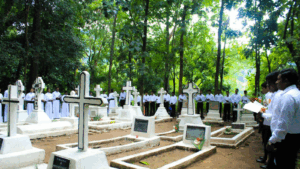
The passage of time, combined with the demands of a large resident population of seminarians, has resulted in significant structural fatigue. Many buildings now require major rehabilitation and modernisation if they are to remain safe, functional and capable of supporting the complex formation needs of the Church in the decades ahead.
The transformation envisioned by the Church, especially under Pastores Dabo Vobis, the Ratio Fundamentalis Institutionis Sacerdotalis, and more recently Veritatis Gaudium, calls for formation environments that enable holistic growth: spiritual, intellectual, human, pastoral and communal.
This requires appropriate classrooms, technologically-equipped lecture halls, updated residential spaces, adequate sanitation facilities, accessible pathways, well-designed spaces for psychological accompaniment, pastoral simulation rooms, libraries suited to digital research and safe common areas that promote fraternity. Sadly, many of the current facilities, due to their age and original design, fall short of meeting these essential requirements for 21st-century priestly formation.
Undertaking the necessary upgrades demands both specialised technical expertise, including heritage-sensitive construction planning, and a substantial level of financial investment. This poses a serious difficulty in the present economic context of Sri Lanka, where local fundraising capacity is severely limited. At the same time, access to foreign funding has become increasingly competitive and challenging due to global economic pressures and shifting donor priorities.
Consequently, the Seminary faces the delicate task of preserving its historic identity while urgently pursuing the infrastructural renewal required to form future priests who can respond effectively to the pastoral needs of a rapidly changing world.
A further major challenge faced by the National Seminary is the mounting financial pressure caused by the country’s continuing economic instability. With inflation remaining high, the day-to-day running costs of the Seminary, particularly food, utilities, maintenance, educational materials and medical support, have increased sharply. These rising operational expenses place an unavoidable strain on the Seminary’s limited annual budget, which must stretch to cover the needs of more than two hundred seminarians, as well as the resident staff and formators.
Compounding this situation is the significant decline in foreign funding. Historically, the Seminary benefitted from the generosity of international mission partners and benefactors. However, global financial constraints, shifting donor priorities and increased competition for aid have resulted in a steady reduction of external assistance. The Seminary thus finds itself navigating a difficult transition from reliance on foreign support to a more self-sustaining financial model, a shift that requires careful planning and long-term investment.
To respond to this emerging reality, the Seminary recognises the need to develop well-designed income-generating projects capable of contributing meaningfully to financial sustainability. However, such ventures can only succeed if built upon sound strategic plans, clear business models, updated technology and ongoing oversight. Whether in agriculture, dairy production, educational services or hospitality, each initiative demands rigorous feasibility studies, market assessments and proper financial controls to ensure long-term viability.
A further challenge is the lack of dedicated and competent full-time personnel who can manage these projects professionally. Priests and religious with the required managerial skills often carry multiple pastoral or administrative responsibilities in their dioceses or congregations, and it is increasingly difficult to appoint full-time staff for these specialised tasks.
In this context, the Seminary faces the multifaceted challenge of rising costs, declining external support and the need for robust organisational capacity – all of which directly impact its ability to provide high-quality priestly formation.
What we’re doing to meet the challenges
In response to the difficulties encountered, the National Seminary has initiated several strategic measures to address these challenges in a sustainable and mission-oriented manner.
- Strengthening the academic faculty
To address the shortage of qualified lecturers, the Seminary has begun building a comprehensive database of lay and religious scholars – both locally and internationally – who possess ecclesiastical qualifications in philosophy, theology, canon law and related fields. Once this mapping is complete, the Seminary intends to carry out a thorough analysis of faculty availability and subsequently engage in dialogue with their respective superiors to obtain their service on a contractual or part-time basis. This initiative is complemented by the development of a ten-year staff formation and recruitment plan, aimed at ensuring long-term stability and the continuous strengthening of the intellectual formation programme.
- Technical support through Catholic professionals
In addressing infrastructural challenges, the Seminary is greatly supported by a committed group of Catholic professionals, including architects, engineers and quantity surveyors, who have generously volunteered their expertise on an honorary basis. They are currently conducting detailed assessments of the Seminary’s century-old buildings and preparing priority-based renovation reports, architectural plans and cost-effective strategies for phased implementation. Their guidance is invaluable in identifying durable, safe and financially viable solutions that respect the heritage of the Seminary, while meeting contemporary formation needs.
Efforts towards self-sufficiency
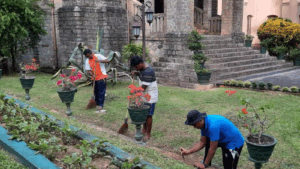 In response to the growing financial pressures and the diminishing availability of external funding, the National Seminary has placed renewed emphasis on building a sustainable financial foundation through carefully planned self-sufficiency initiatives. Among these, the most promising and strategically important is the expansion and modernisation of the Seminary’s dairy farm, which has long served as a vital source of nourishment for the community. Recognising the changing socio-economic landscape of Sri Lanka, the Seminary has identified the dairy industry as an area with considerable national demand, stable market potential and direct relevance to improving local food security.
The overarching goal of this initiative is twofold: first, to generate a steady and reliable income stream that reduces dependence on external benefactors, and second, to enhance the Seminary’s contribution to the well-being of neighbouring communities by supplying fresh, affordable dairy products.
To achieve this, the Seminary has already prepared a set of detailed development plans that include expanding the number of cows, improving breeding practices and upgrading milking and processing facilities. By adopting modern dairy technologies and efficient management systems, the initiative seeks to significantly increase both milk production and the range of value-added products such as yoghurt, curd and bottled milk.
This long-term project is designed to be implemented in phases, ensuring financial prudence while allowing gradual scaling based on available resources. The Seminary is currently working on mobilising the required funds through local fundraising efforts, partnerships with development-oriented Catholic organisations and collaboration with mission partners who support food security, rural development and sustainable agriculture. The Seminary also hopes to engage with agencies that offer technical support, training and access to modern livestock management practices.
Beyond economic benefits, the initiative carries important pastoral and social dimensions. By contributing to local food security, especially for families living in the vicinity, the Seminary continues its longstanding tradition of serving the poor and strengthening communal bonds. The dairy project also provides seminarians with valuable exposure to responsible stewardship, community engagement and practical leadership. These skills are essential for future pastoral ministry.
Through these carefully structured self-sufficiency efforts, the National Seminary strives to secure the financial stability needed to sustain high-quality priestly formation, while simultaneously embodying the Gospel values of service, responsibility and solidarity with the people it serves.
Looking forward
For the academic year 2025/2026, we hope to make progress principally in two areas:
- Deepening synodal priestly formation
Our foremost hope is to intensify our efforts in shaping a formation programme rooted in the synodal vision of the Church, as articulated by Pope Francis and the Synod on Synodality. The Seminary is firmly convinced that the future of the Church, especially in a multi-religious and culturally diverse context like Sri Lanka, requires priests who are collaborators, discerning leaders, bridge-builders and servants of communion.
In 2026, our primary focus is to take intentional steps toward making the National Seminary community itself a ‘living model of synodality’. This includes the gradual and meaningful integration of seminarians from all twelve dioceses, from fifteen religious congregations, and from diverse ethnic and linguistic backgrounds. It also includes the increasing number of international seminarians who now enrich our community. Forming future priests in such a diverse environment cultivates the habits of listening, mutual respect, dialogue and co-responsibility. These qualities are essential for the priesthood in the 21st century.
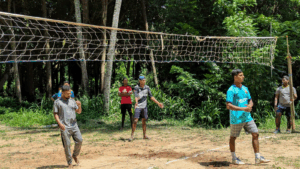 We also aspire to foster deeper integration across different components of the Seminary community: seminarians and formators, clerical staff and lay collaborators, and academic and pastoral personnel. The Seminary hopes to create more spaces for shared discernment, joint planning and communal celebrations, allowing every member to participate more actively in the life of the institution.
Beyond the internal community, the Seminary seeks to strengthen its engagement with the wider social and religious landscape. Located in the central province, where Buddhists form the clear majority, the Seminary hopes to cultivate initiatives that promote interreligious dialogue and peaceful coexistence.
Likewise, we plan to deepen collaboration with diocesan structures, religious congregations, other Christian denominations, and civil universities and colleges, thereby fostering a broader ecosystem of dialogue, theological reflection and pastoral creativity. In doing so, the Seminary hopes to form priests who are culturally sensitive, intellectually open, pastorally grounded and spiritually mature.
- Advancing self-sufficiency for sustainable formation
Our second major hope for 2026 is to make substantial progress in the Seminary’s long-term vision of achieving financial self-sufficiency, ensuring that we can offer a priestly formation that is both holistic and suited to the realities of the contemporary world. We recognise that sustainable formation cannot be separated from sound financial stewardship, especially in an economic climate marked by inflation, reduced foreign funding and increasing operational costs.
 With this in mind, the Seminary is committed to implementing the first phases of its strategic development plans, particularly the expansion of the dairy farm and other potential income-generating ventures. These initiatives are intended not only to secure financial stability, but also to improve the overall environment in which seminarians live and study. By gradually enhancing infrastructure, modernising facilities and improving formation resources, we hope to create a formation setting that reflects the dignity of the priestly vocation and responds to the pastoral needs of our time.
Through these two hopes, namely, a synodal community and sustainable formation, the National Seminary prays for a fruitful and grace-filled year 2026, trusting in God’s providence and in the generous support of our mission partners.
Fr Quintus, Rector